In the past 25 years the Take a Hike Foundation has graduated 2,000 youth experiencing vulnerability and changed the trajectory of their lives.
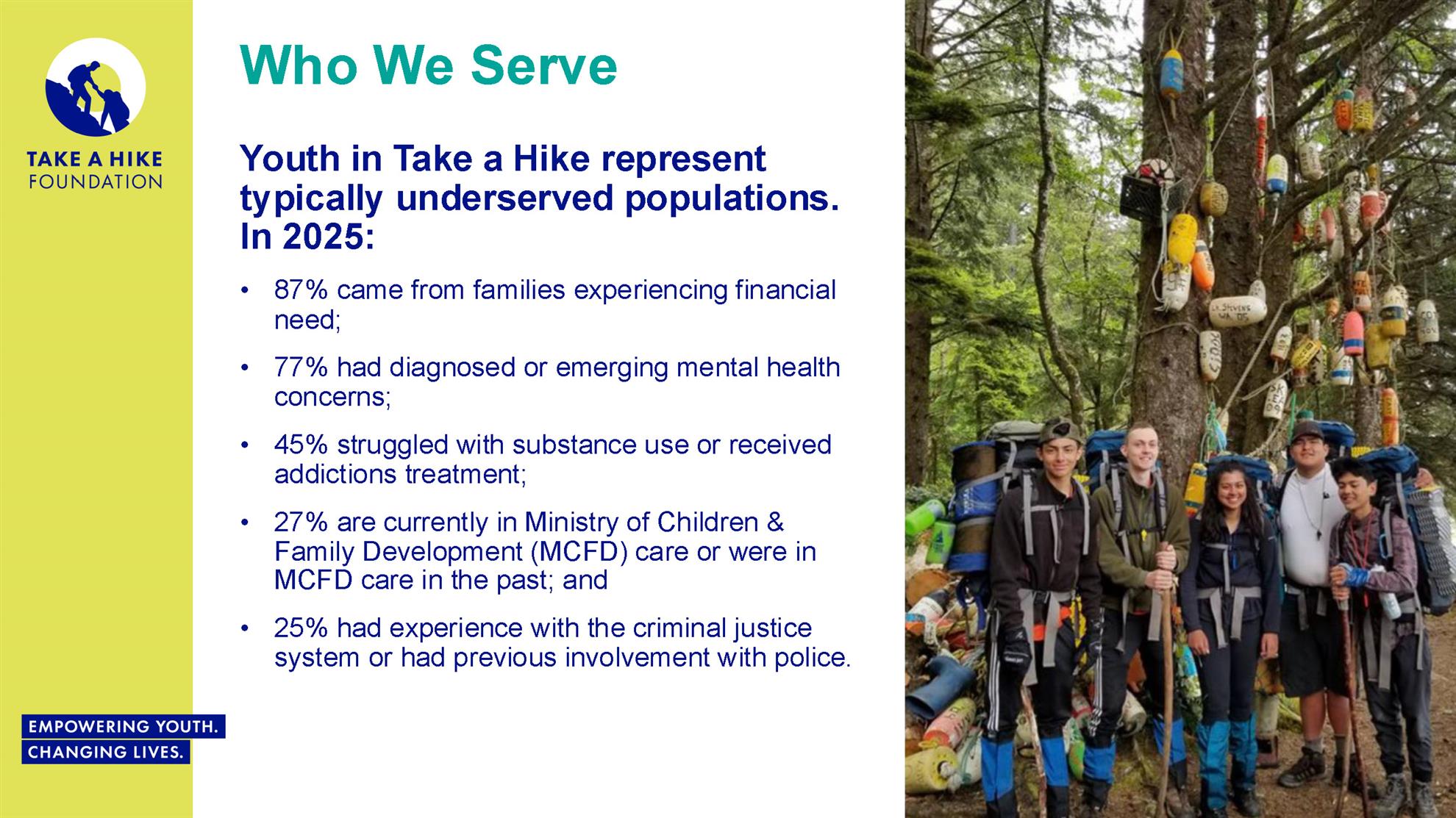
The program primarily serves underserved youth experiencing mental health challenges, trauma, financial hardship, substance use issues, and some prior justice system involvement. Take a Hike is a full‑time alternative education program for Grade 10–12 students whose lives, mental‑health challenges, trauma, or instability make mainstream school inaccessible. Youth are referred through partner school districts.
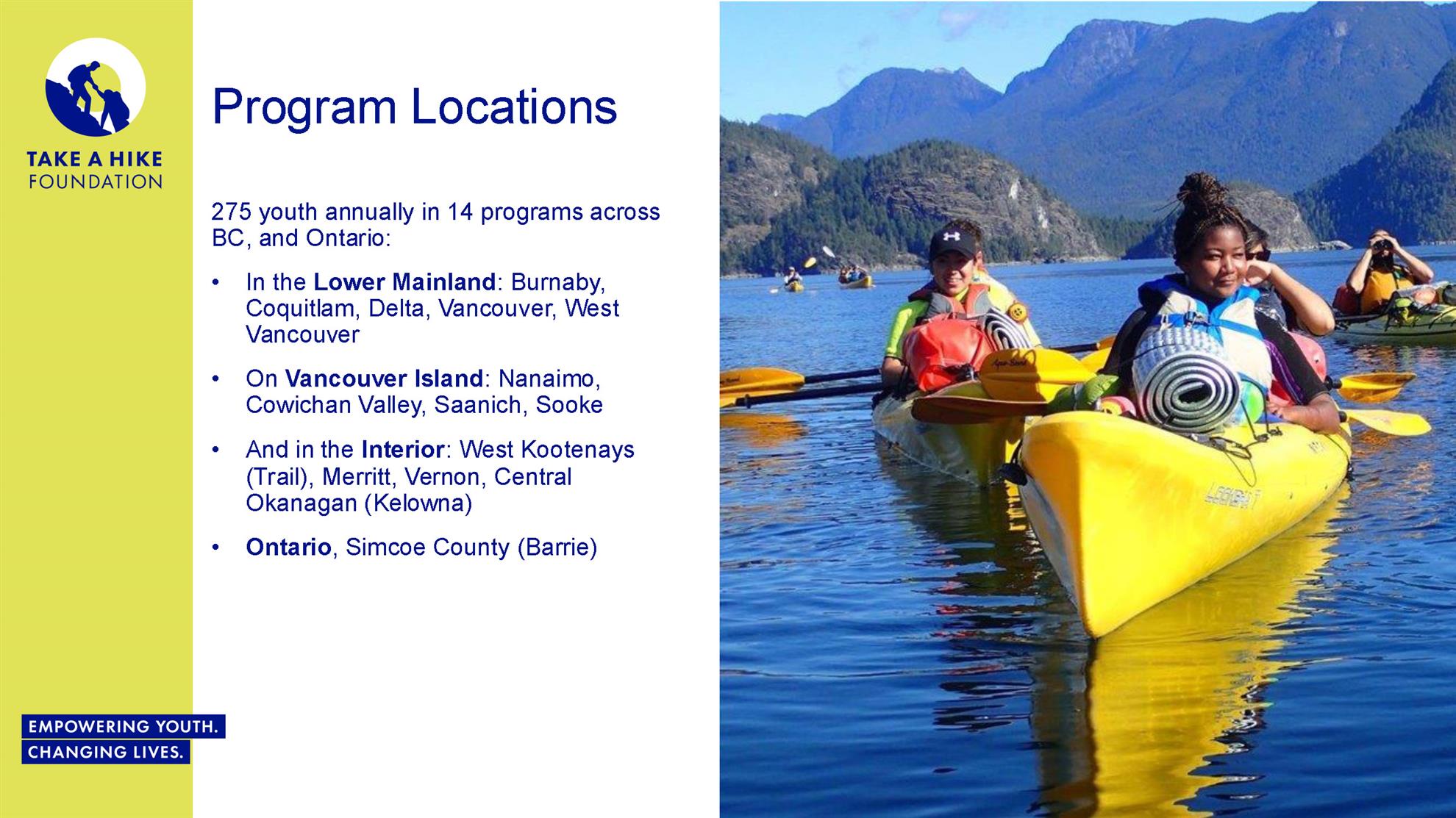
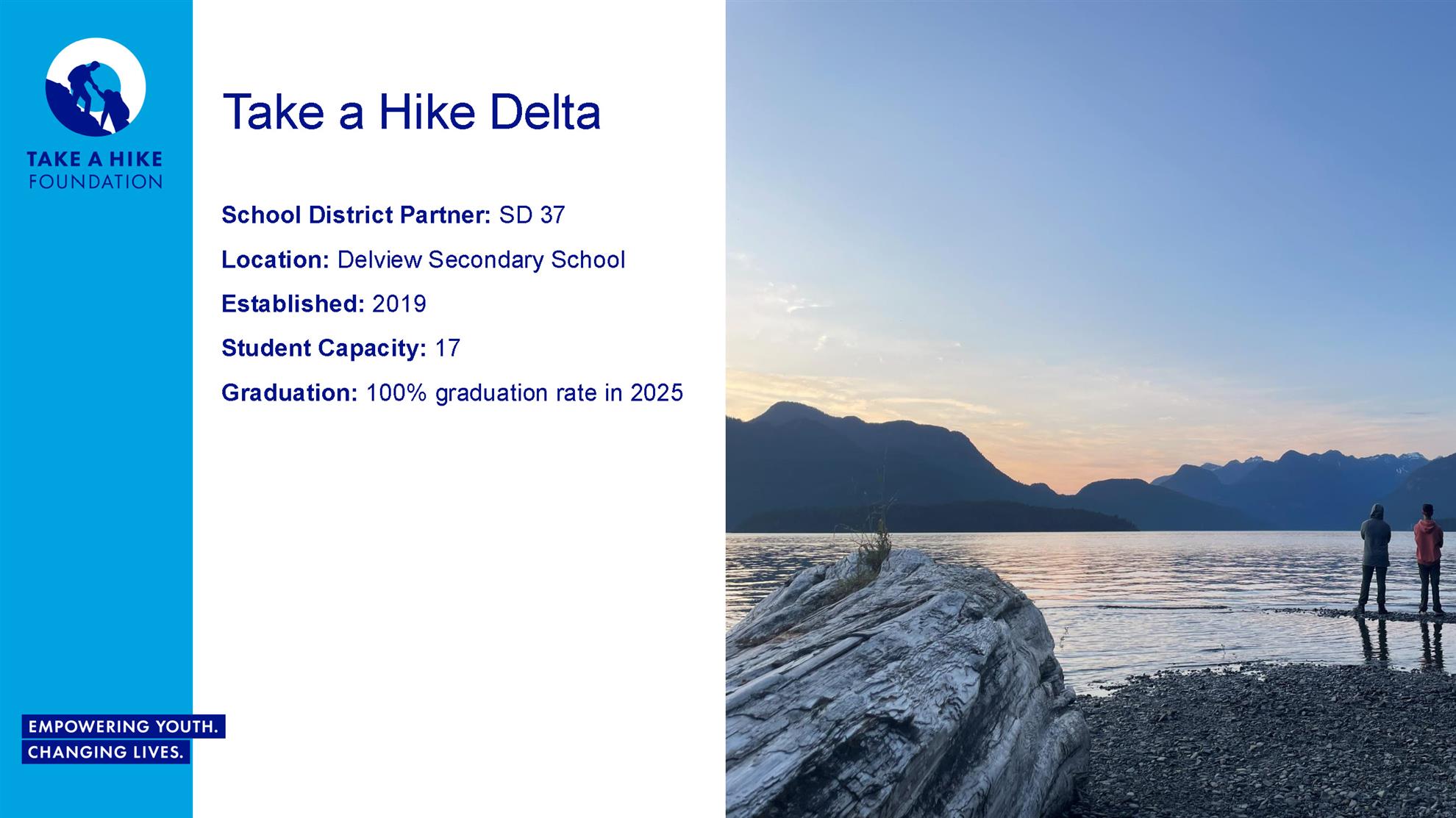
The Take a Hike Foundation operates 14 programs in BC and a new one in Ontario all committed to youth mental health and education. The program for all of Delta is based at Deltaview Secondary School in North Delta, and serves 275 youth annually.
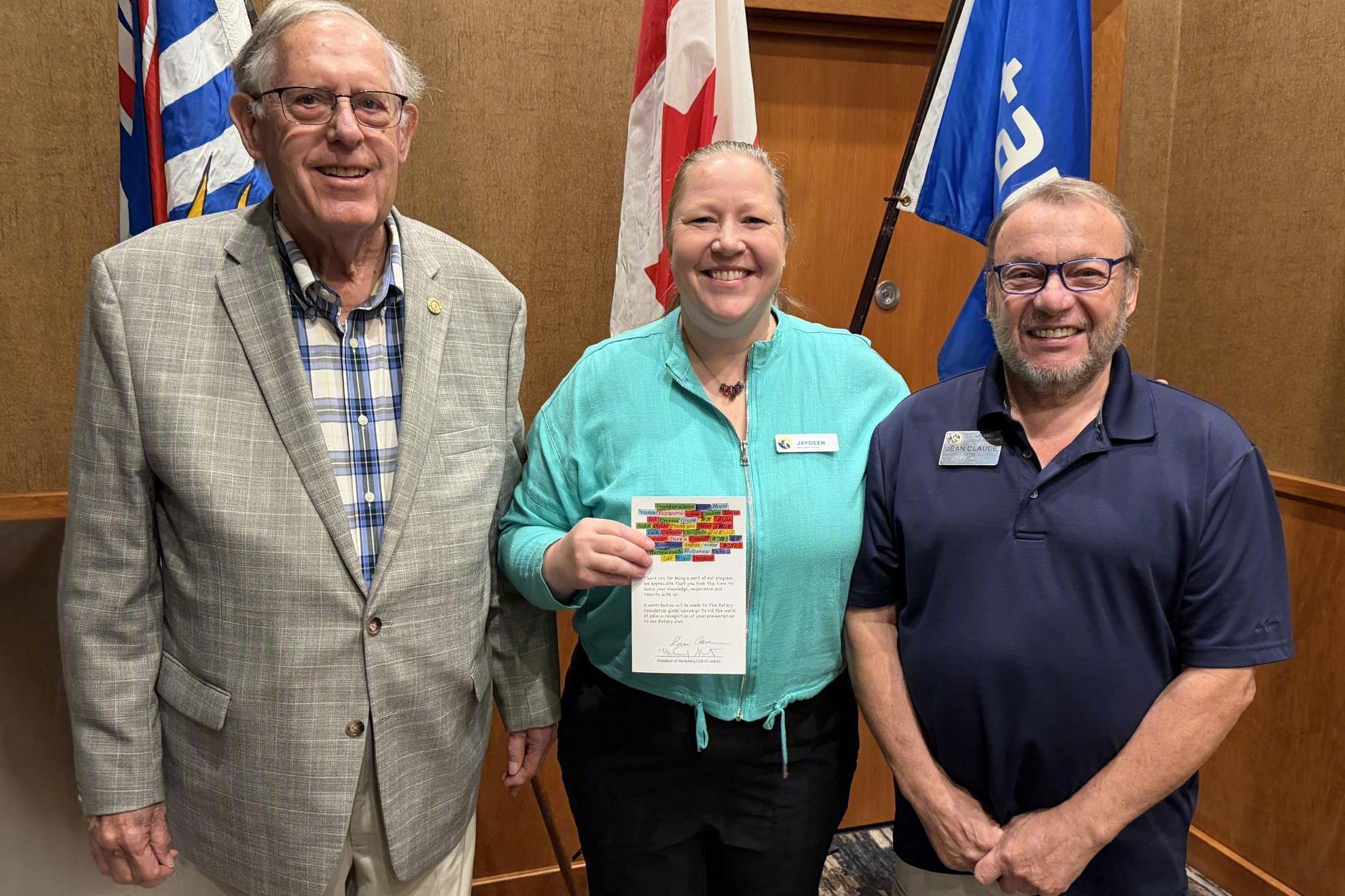
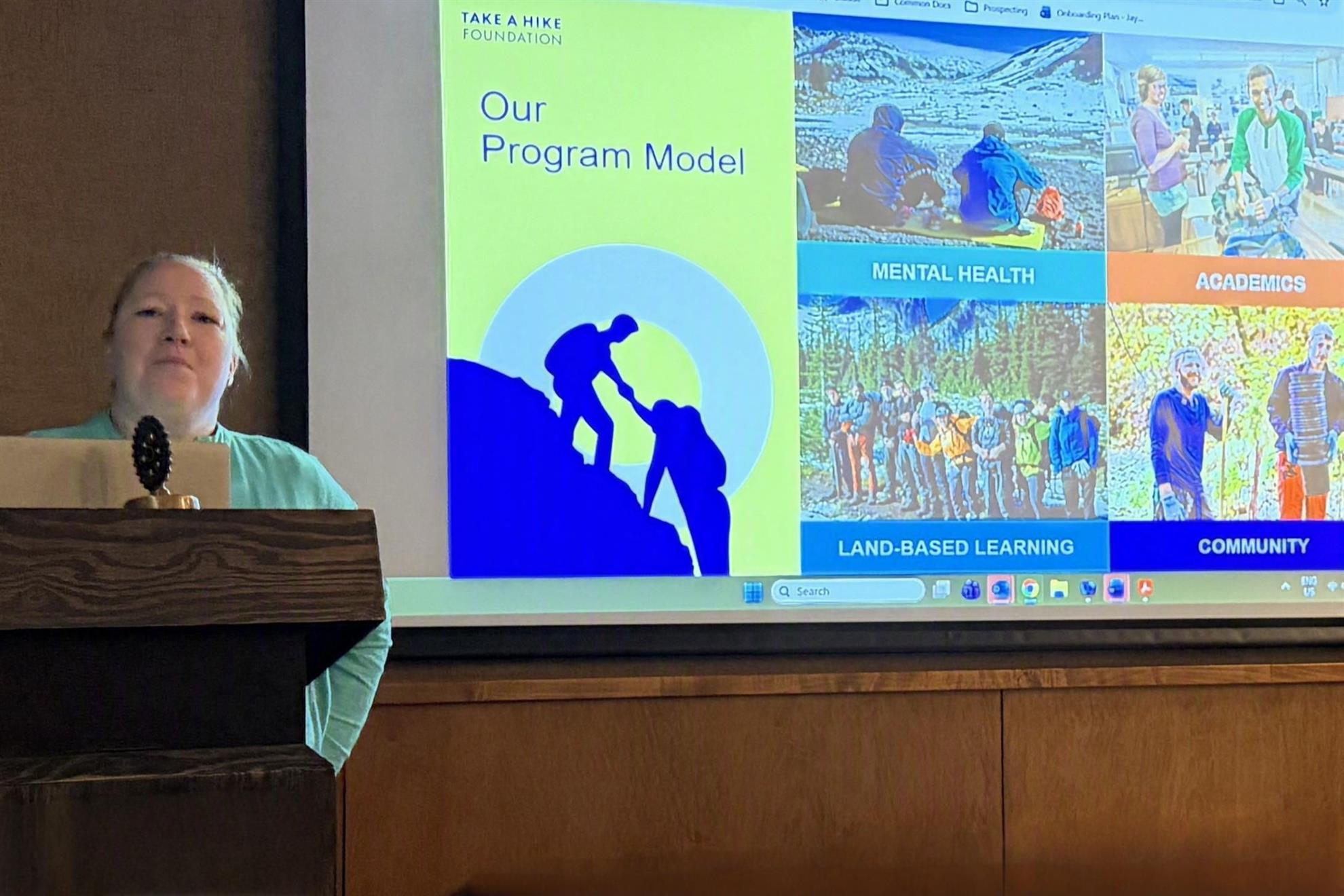 Speaking to the Rotary Club of Ladner on September 1, 2026, Jayden Williams, Take a Hike's Manager of Philanthropy, says, "Today’s youth are navigating challenges like never before, making our program even more vital. Take a Hike is their school, not an after‑school or weekend program. They go to school at take a hike. It's just that mainstream school wasn’t working for them.”
 |  |
 |  |
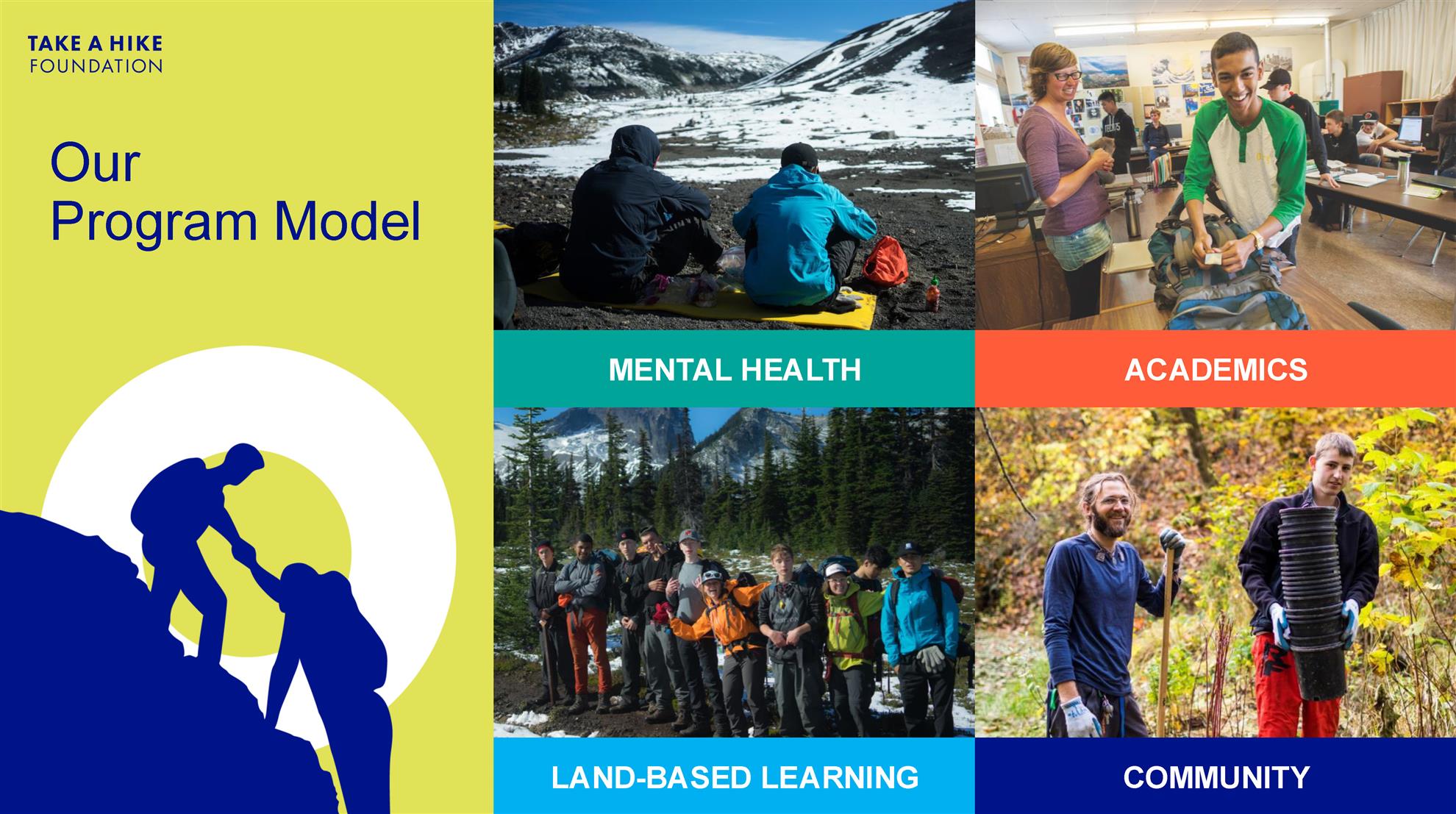
There are four core program pillars.
1. Mental Health: A full‑time clinical counsellor is embedded in every classroom, present during academic work, outdoor days, and multi‑day trips. Youth receive individual therapy, family sessions, and daily relational support.
2. Academics: Each classroom has a certified teacher who supports all subject areas, supplemented by volunteers and additional teachers. In every classroom, there is a teacher who finds resources for a youth to complete their grades. The goal is graduation and restoring future choice.
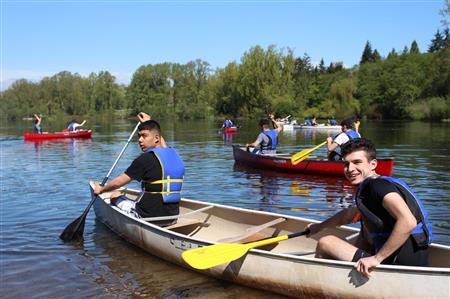
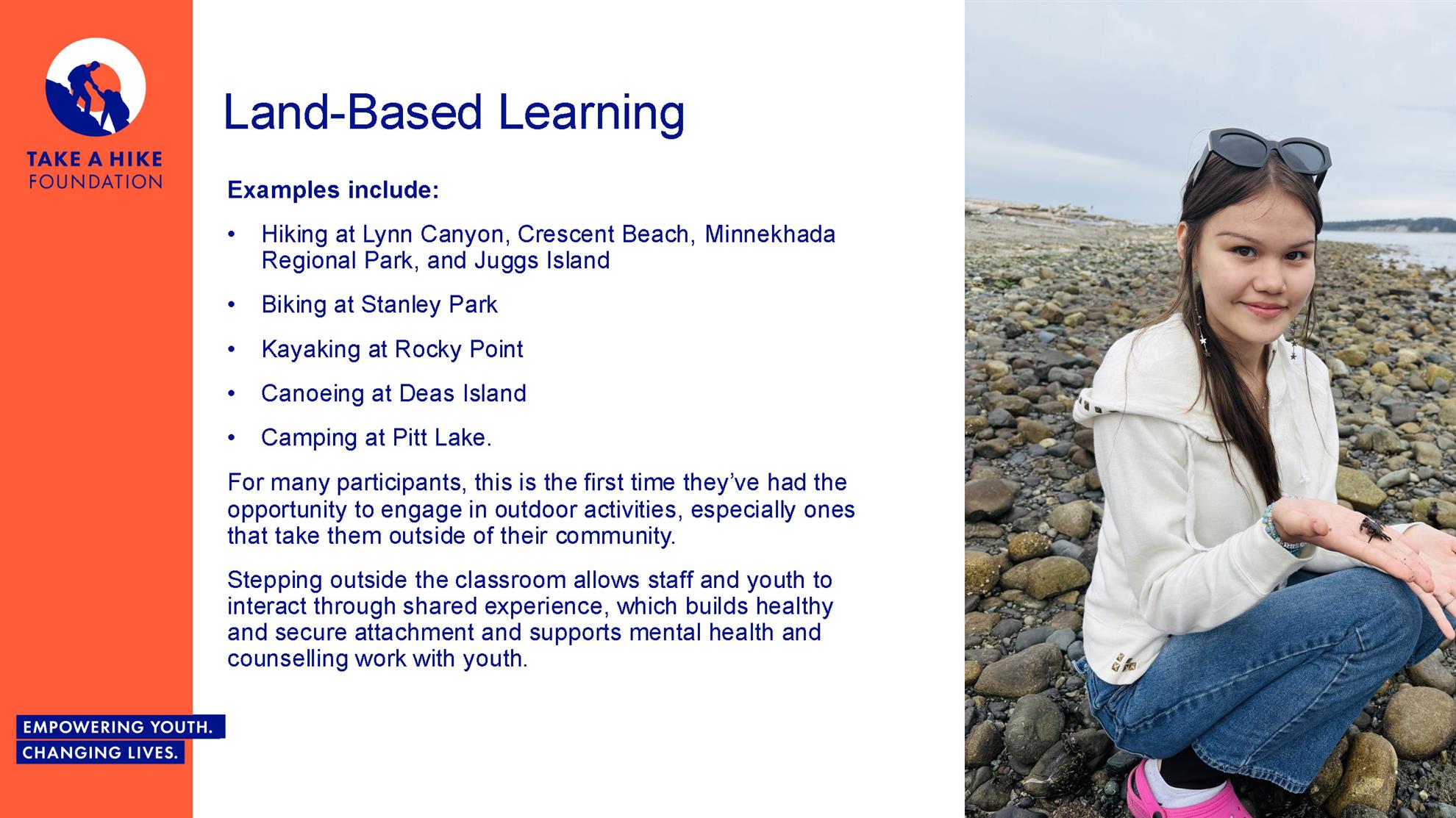
3. Land‑Based Learning: Youth spend one full day each week outdoors—hiking, kayaking, biking, climbing—and participate in multi‑day expeditions (3–5 days). Many experience outdoor recreation for the first time. There are also occasional multi-day trips.”
4. Community: A youth and family worker connects students to community supports, brings volunteers into the classroom, and helps youth volunteer locally—shifting identity from “taking” to “contributing.” The aim is getting youth to volunteer in their community so that they feel, "I’m actually part of the community.”
 |  |
| |
Co-president Richard Shantz and Jean-Claude Detre thank | |
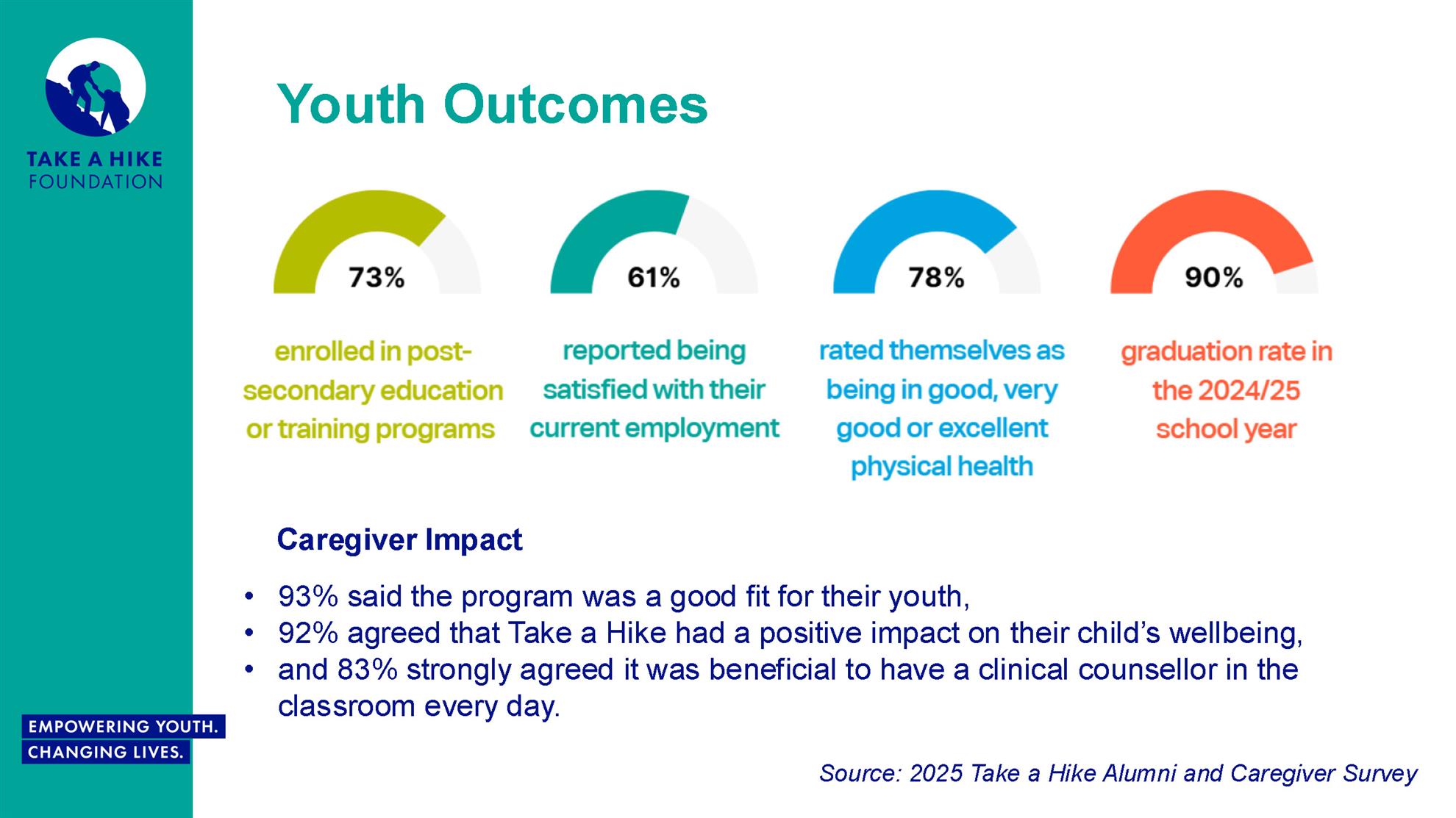
Recent alumni and program data show strong long‑term impact:
- 90% graduation rate (2024–25), often surpassing mainstream schools
- 73% enrolled in postsecondary or training
- 61% satisfied with employment
- 78% report good/very good physical health