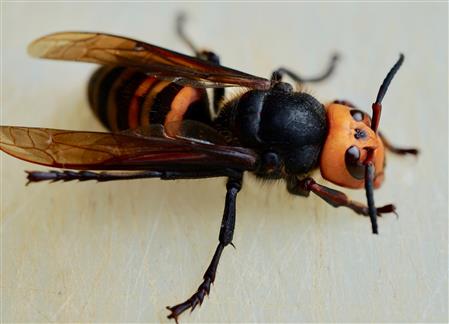
Apiculture is the management and study of honeybees and their key role in the production of most fruit and forage crops. Honeybees and other pollinators are vital to the agricultural crops grown in Delta and throughout the province. Provincial Apiculturist Paul van Westendorp, a fellow Rotarian in the Tsawwassen club, spoke about the Asian Giant Hornet, the world's largest hornet with a body length of up to 5 cm. It is an invasive hazard because it feeds on other insects, including honeybees, and can destroy a honeybee colony. Some giant hornets have been sighted in this region in recent years.
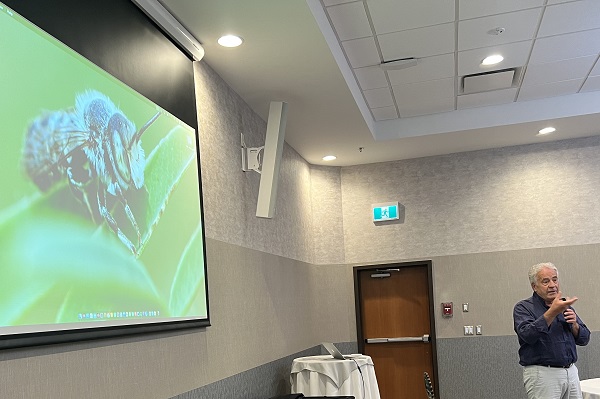 Paul van Westendorp is a UBC graduate, who started his career in apiculture research. That research took him to East Africa for several years of tropical apiculture. There beekeeping development and education offered subsistence farmers supplemental income without placing demands on land ownership. In the late 1980s, Paul was appointed as Provincial Apiculturist of Alberta, and subsequently appointed to the same position in British Columbia.
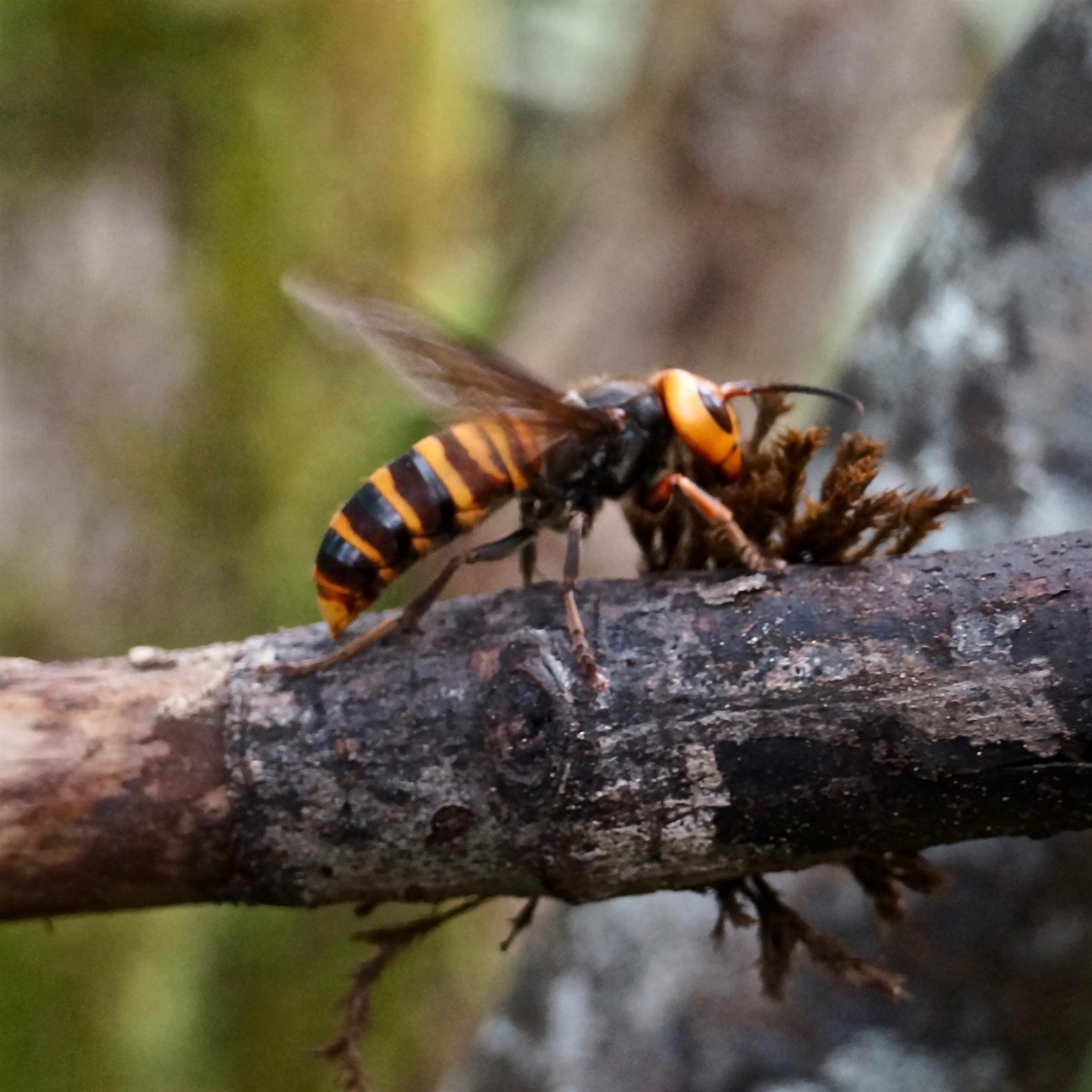
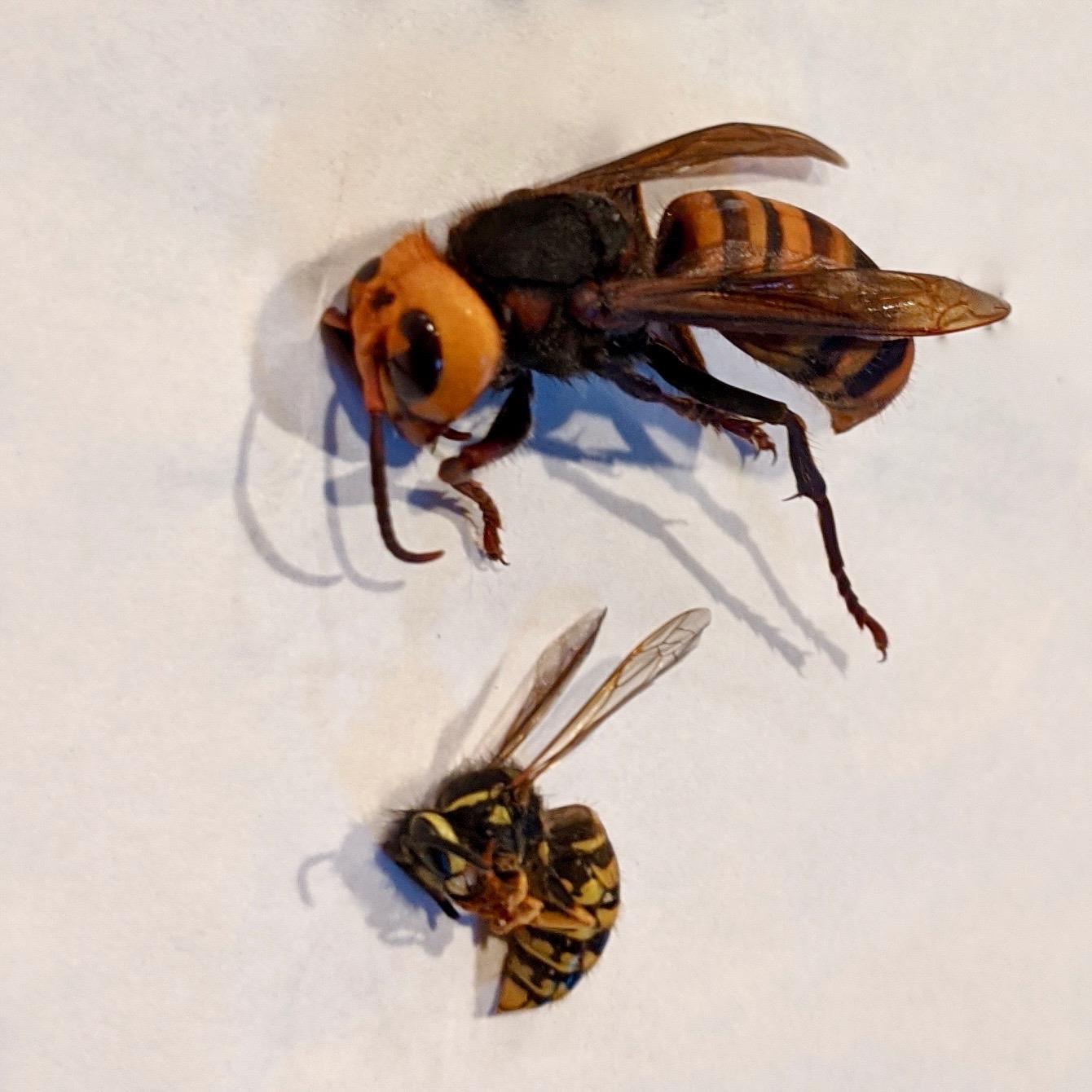
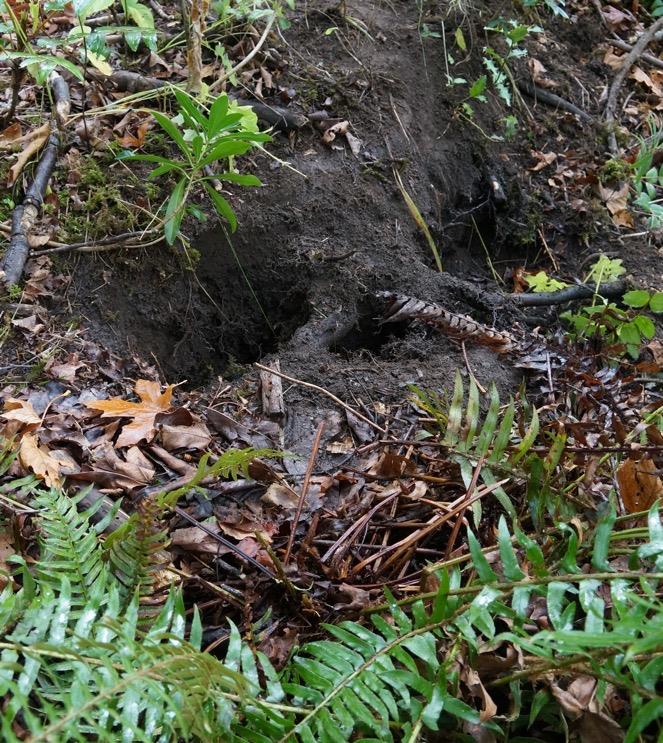
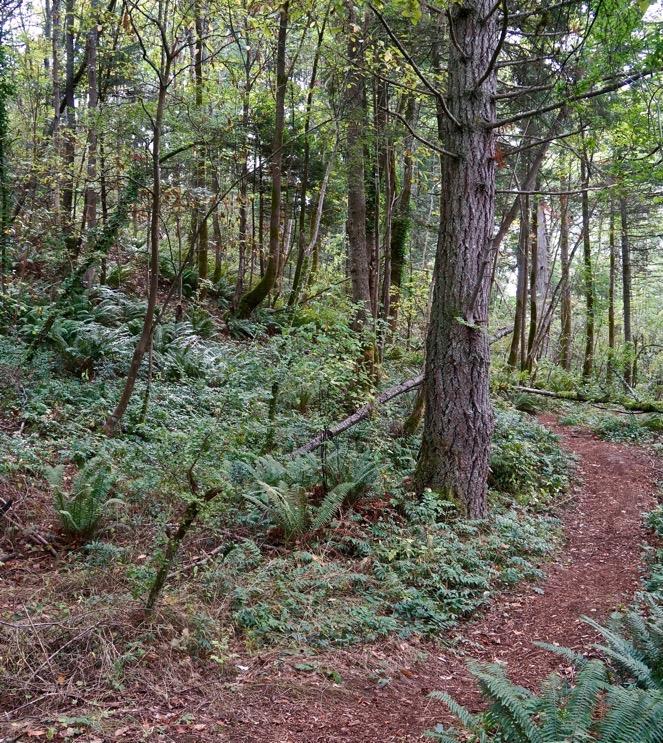
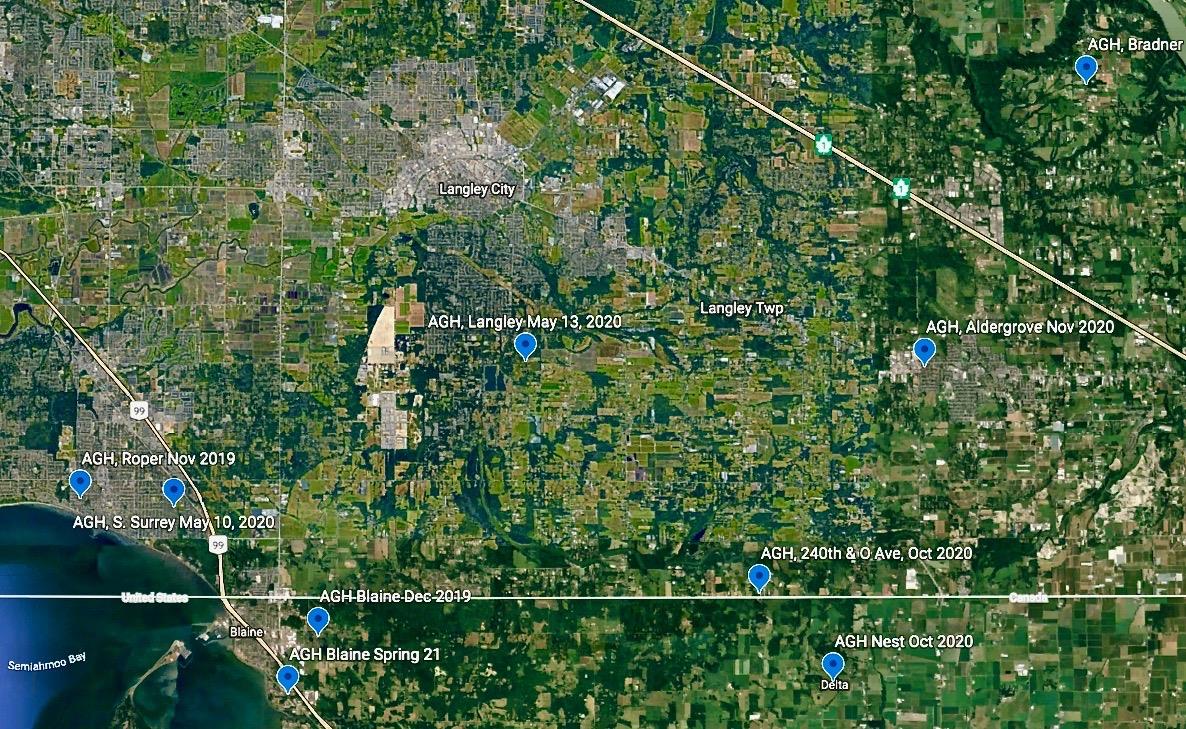
Asian Giant Hornet compared to common yellow jacket wasp. They often nest in abandoned burrows in forest areas and the limited locations where the hornets have been spotted in recent years
 |  |
 |  |
 | |
Asian Giant Hornets are not interested in humans, pets and large animals. They hunt insects for food. They build their nests in the ground, often in forested areas. The only time these hornets will attack is when their nest is disturbed. Their sting can be hazardous to people. Hornet nests die off in late fall. Only queens winter on their own.
The Asian Giant Hornet was first found in B.C. in Nanaimo in August 2019. A single nest was located and destroyed. Since then, six specimens have been found in the Fraser Valley from White Rock to Aldergrove in 2020. No other specimens have been found on Vancouver Island since 2019. Surveys were carried out in the Fraser Valley and Vancouver Island in 2021.
To improve the chances of finding Asian Giant Hornets, the public is encouraged to report any sightings or collections of large wasp-like insects, and to include a picture, if possible, for verification.